COMAH
The Control of Major Accident Hazards Regulations 2015 (COMAH) is the principle UK regime for the prevention of major accidents involving dangerous substances and the limitation of their consequences for people and the environment.
COMAH applies to establishments where dangerous substances are present at or above specified threshold quantities. These substances are defined by reference to both named substances and hazard categories, many of which are derived from CLP hazard classifications.
Establishments are divided into two tiers:
Lower tier sites, where substances exceed lower thresholds
Upper tier sites, where higher thresholds are exceeded and more extensive duties apply
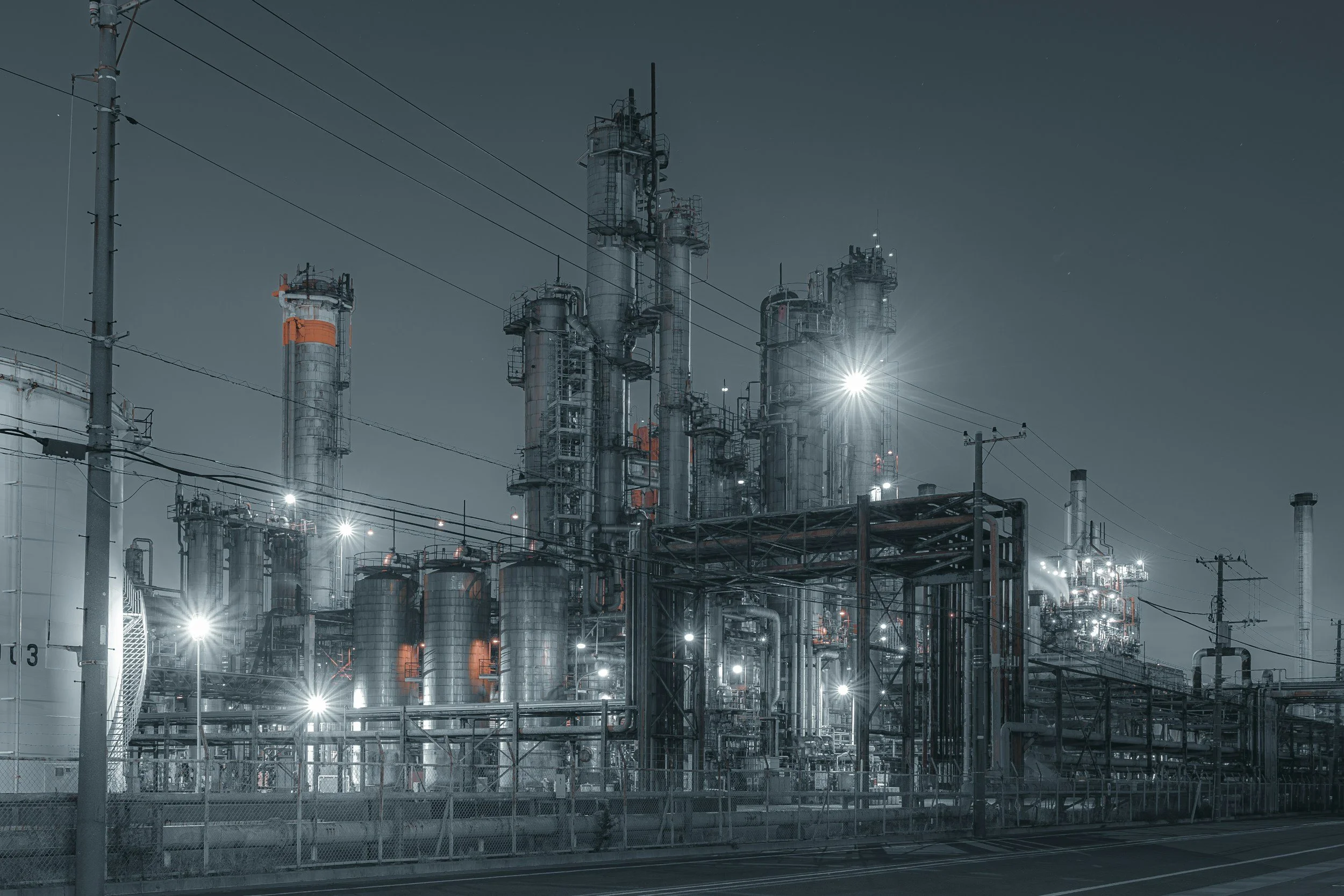
In practice, COMAH covers a wide range of sites, including chemical manufacturing, storage and distribution, fuel terminals and other facilities handling hazardous substances at scale. It may also apply to some explosives and nuclear sites, and other industries where specified dangerous substances are present above the defined thresholds.
COMAH gives effect in the UK to most of the Seveso III Directive and forms part of a wider European framework for the control of major industrial hazards. Land-use planning requirements of the Directive are implemented by separate land-use planning legislation.
About COMAH
COMAH places duties on operators to take all measures necessary to prevent major accidents and limit their consequences. In practice, this includes:
Identifying and assessing the risks from major accident hazards
Implementing appropriate measures to prevent major accidents and mitigate their consequences, to reduce risk as low as reasonably practicable (ALARP)
Establishing and maintaining a Major Accident Prevention Policy (MAPP)
For upper tier sites, preparing and maintaining a Safety Report demonstrating that major accident hazards have been identified and their risks adequately controlled
Developing on-site emergency plans and, for upper tier sites, supporting off-site emergency planning by authorities
Providing information to regulators and, for upper tier sites, the public
These duties require a systematic and structured approach to managing major hazards across the site lifecycle.
Core duties under COMAH
Major accident hazards and risk control
COMAH focuses on low-frequency, high-consequence events such as large fires, explosions, toxic releases and major environmental pollution. The emphasis is not only on preventing incidents, but also on ensuring that, if they occur, their consequences are minimised.
Control measures typically include a combination of:
Inherently safer design and process selection
Engineering controls and safety systems
Operational procedures and safe systems of work
Inspection, maintenance and asset integrity management
Emergency preparedness and response arrangements
The adequacy of these measures must be demonstrated through systematic analysis and supported by evidence.
COMAH sits within a broader regulatory framework for managing hazardous substances:
DSEAR addresses fire and explosion risks at the workplace
COSHH focuses on health risks from exposure to hazardous substances
CLP and REACH provide the basis for identifying hazardous properties and communicating risk management information
Environmental permitting regulates emissions and environmental impacts
In practice, the same substances and processes may fall within several regimes. Effective compliance requires an integrated approach, ensuring that risk assessments, control measures and management systems are consistent across all applicable frameworks.
Relationship with other laws
COMAH is regulated jointly by the Health and Safety Executive (HSE) and the environment agencies for England, Wales, Scotland and Northern Ireland. Sites are subject to structured inspection programmes, with a strong focus on:
Process safety and major hazard control
Leadership, competence and safety management systems
Asset integrity and maintenance
Emergency preparedness
Compliance expectations are high, and regulatory scrutiny is detailed and evidence-based. The adequacy of risk control measures must be clearly demonstrated, not simply asserted.
Inspection and enforcement
COMAH applies to some of the highest hazard sites and operations, where failures can have catastrophic consequences for people, the environment and business continuity. It is therefore one of the most demanding and closely scrutinised regulatory regimes.
Effective COMAH compliance requires more than documentation. It depends on robust technical understanding, strong management systems and a clear demonstration that risks from major accident hazards are being actively and effectively controlled. Getting this right is critical not only for regulatory compliance, but for the safe and reliable operation of complex industrial activities.
Why COMAH matters
Follow the links below to find copies of the law and guidance published in the UK and EU:
Law and guidance


Find out how we help COMAH operators manage major accident hazards and demonstrate compliance, with a focus on practical, proportionate and defensible solutions aligned with regulatory expectations.
Our services
-
COMAH compliance assessments, audits and gap analysis, including site visits, review of supporting documentation, systems and site practices, with clear reporting of findings and priorities for action.
-
Inspection and enforcement preparedness, including support in preparing for regulatory inspections and investigations, help with follow-up, and strengthening the evidence base that underpins compliance.
-
Assessment of dangerous substances inventories, including threshold calculations, aggregation rules and advice on COMAH applicability, tier classification and regulatory implications.
-
Support in identifying major accident hazards and assessing their risks, including review of representative MAH scenarios, consequence analysis approaches and the adequacy of existing controls.
-
Advice on demonstrating that risks are reduced as low as reasonably practicable (ALARP), including application of relevant good practice, structured decision-making, proportionate cost benefit analysis and the development of process safety performance indicatores (PSPIs)
-
Support with the preparation, structuring and critical review of COMAH safety reports, ensuring that they present a clear, coherent and defensible demonstration of risk control and regulatory compliance.
-
Development and review of Major Accident Prevention Policies, safety management systems and supporting procedures, ensuring alignment with regulatory expectations and site operations.
-
Development and delivery of training and competence frameworks to support effective process safety management and ensure key personnel understand their roles in managing major hazard risks.
-
Advice on on-site emergency arrangements and support for off-site planning, including ensuring that emergency plans are practical, proportionate and aligned with identified major accident scenarios.
-
Support with COMAH notifications and ongoing engagement with the Competent Authority, including facilitating clear, structured communication and supporting interactions with regulators.
-
Development and strengthening of governance, systems and processes that underpin COMAH compliance, ensuring that risk management is embedded, consistent and sustainable over time.