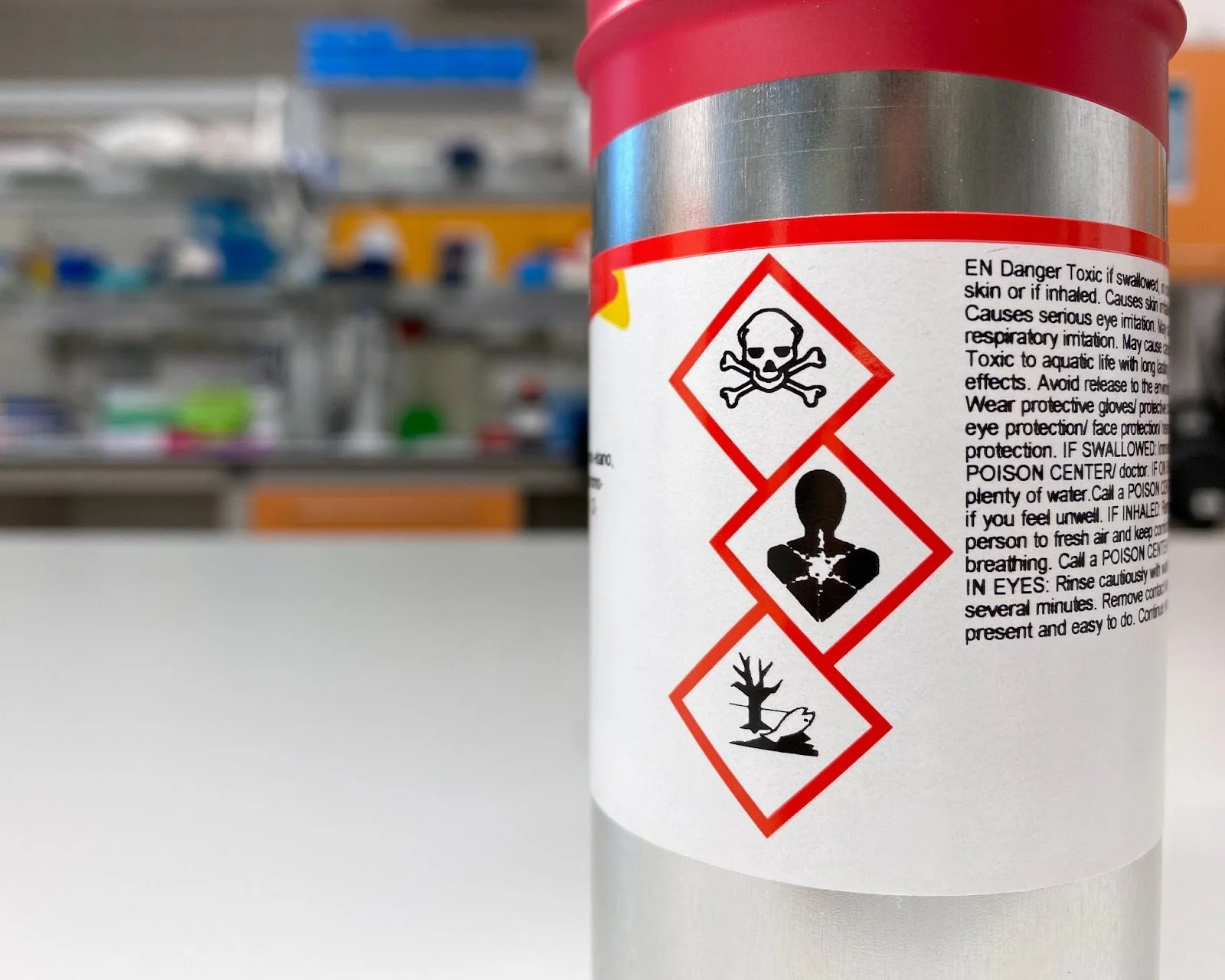
CLP
CLP stands for Regulation (EC) No 1272/2008 on classification, labelling and packaging of substances and mixtures.
CLP requires suppliers of chemical substances or mixtures to identify their hazards (dangers) before placing them on the market. This process is known as ‘classification’ and involves assessing whether a chemical can cause harm by comparing its properties against criteria in the Regulation, for example, to determine whether it is toxic, flammable, carcinogenic, environmentally harmful and so on.
Chemicals are classified so that people using them - either in industry or as consumers - can understand any hazardous effects they could have on human health or the environment and to protect against that harm.
Substances and mixtures that are classified as hazardous must then be labelled and packaged in line with CLP requirements. Labelling ensures the hazards are communicated to users of the substance or mixture, to alert them about the presence of a hazard and the need to manage the associated risks. Packaging requirements exist to ensure chemicals are packaged appropriately, e.g. so that their contents cannot escape, that the contents won't damage the packaging materials, that the packaging does not attract or arouse the curiosity of children or mislead consumers when supplied to the general public, and so on.
There are also duties in CLP concerning the advertisement of hazardous substances and mixtures. Under the EU version of CLP, suppliers must also notify the classification of hazardous substances and mixtures to a classification and labelling inventory and submit poison centre notifications for certain hazardous mixtures.
What is CLP?

CLP implements the United Nations Globally Harmonised System of Classification and Labelling of Chemicals (GHS) within the EU and the UK. This means that hazard classes, pictograms, signal words and hazard statements are internationally aligned, supporting consistency in hazard communication across global supply chains, while retaining some region specific provisions.
Where does CLP come from?
Duties under CLP fall on different actors depending on their role in the supply chain. Manufacturers and importers typically lead on classification, labelling and packaging and, where required, notifying classifications to the inventory and submitting poison centre notifications. Downstream users (such as formulators) and distributors must ensure hazard classifications remain appropriate and that products are correctly labelled and packaged before supply. In practice, compliance requires coordination across the supply chain, with the goal of ensuring that hazard information is accurate and kept up to date.
Who has duties under CLP?
Following the UK’s exit from the EU, Great Britain operates a legally distinct version of CLP, known as GB CLP. While it remains closely aligned with its EU counterpart, there are important differences. For example, poison centre notifications are only voluntary under the GB regime, mandatory classification and labelling requirements for certain chemicals are not fully aligned with EU harmonised classification and labelling requirements, and the new EU hazard classes on environmental hazards and endocrine disruption have not been introduced into GB CLP.
What about Brexit?

CLP classification provides the foundation for a wide range of other regulatory regimes, including occupational health and safety law, major accident hazards legislation, environmental protection, consumer protection and, in some cases, planning and land use decisions. They also play a central role in other chemical regulations, such as biocidal products and plant protection products, where hazard classifications can determine approval status, substitution requirements and conditions of use.
As a result, classification outcomes often act as a regulatory gateway, determining whether specific legal duties apply, the level of control measures required and, ultimately, whether and how a substance or product can be placed on the market and used. Changes to hazard classifications can therefore have significant ripple effects.
Robust and defensible classification under CLP is fundamental to compliance across multiple regulatory regimes. Errors or inconsistencies can affect market access, product labelling, supply chain communication and enforcement risk. Getting classification right at the outset is therefore critical both from a compliance and a commercial perspective.
Impacts on other legislation
Follow the links below to find consolidated copies of the EU and UK versions of CLP, as well as guidance published by ECHA and HSE:
Law and guidance




Find out how we help businesses implement and demonstrate compliance with GB CLP and EU CLP, with a focus on practical, proportionate and defensible compliance.
Our services
-
CLP compliance assessments, audits and gap analysis, including review of classification, labelling, packaging and supporting documentation, with clear reporting of findings, risks and priorities for action.
-
Inspection and enforcement preparedness, including support in preparing for regulatory inspections and investigations, help with follow-up, and strengthening the evidence base that underpins compliance.
-
Hazard classification for your substances and mixtures, including interpretation of CLP criteria, resolving borderline or complex cases, and ensuring classifications are robust and defensible.
-
Review and development of compliant labels and packaging, including hazard pictograms, hazard (H) statements, precautionary (P) statements and presentation, ensuring clear and accurate communication of hazards.
-
Advice on compliance with CLP requirements relating to advertising and marketing, ensuring that claims do not mislead users about the hazards of a substance or mixture.
-
Identifying and managing the wider regulatory implications of classification decisions, including impacts on COSHH, DSEAR, COMAH and product-specific legislation.
-
Review of product formulations and compositions to identify how classification outcomes are affected, and how formulation changes may influence regulatory obligations and marketability.
-
Practical support for businesses operating across GB and EU markets, including managing differences between GB CLP and EU CLP and maintaining compliance across both regimes.
-
Supply chain and supplier assurance, including assessing supplier readiness and compliance performance, and supporting supply chain communications where needed.
-
Strategic advice and advocacy, including support with regulatory engagement, consultation responses and positions that are technically sound and defensible in practice.
-
Compliance management systems, including developing and strengthening the governance, procedures, training and records that underpin day-to-day compliance and make it sustainable.